


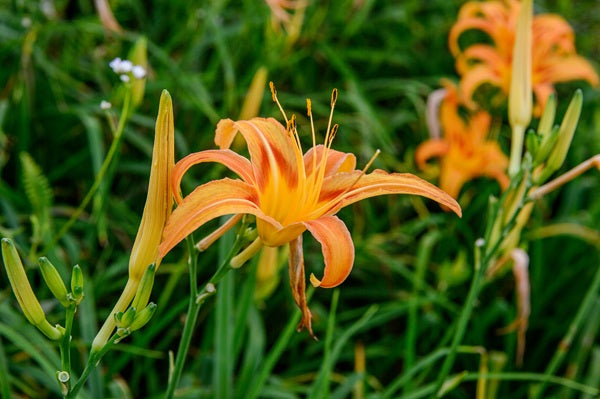
Add some vibrant color to your landscape with the heirloom, single trumpet blooming orange daylily! Best when planted in an area where it has room to multiply! Before you know it, you will have multiple plants and will be sharing with friends and family. You'll cherish this tough heirloom perennial that will over time fill a large area of the garden!
Buy now to get your daylilies started. Enjoy this single orange blooming daylily, Hemerocallis fulva!

The Orange Daylily is the workhorse of the Southern summer garden. Tough as old boots, comes back bigger every year, and asks for almost nothing in return. Plant them now and they'll spend the summer building strong roots for a knockout next season. Daylilies are remarkably drought-tolerant — we didn't fuss over watering when we put ours in the ground, just gave them enough to settle and let nature do the rest. Once established, they shrug off heat, neglect, and lean soil with the same easy grace. Pair them with summer-blooming bulbs like crinums or rain lilies, and you've got a low-maintenance bed that earns its keep from June through fall.

Planting: Give them full sun for the best bloom — 6 or more hours, though in zones 8 and 9 they'll happily take a little afternoon shade — and just about any soil will do. They handle clay better than most bulbs and shrug off the hot, neglected spots where fussier plants give up. that makes them ideal for slopes (the fibrous tuberous roots hold soil and offer solid erosion control), mailbox beds, driveway edges, foundation plantings, and that brutal strip along a fence line.

They also mix beautifully into perennial borders, where the arching strappy foliage keeps things looking tidy even when nothing's blooming. They clump up over the years, so space them about 18–24 inches apart, and deadhead spent blooms if you like a neat look — it's purely cosmetic and won't affect the plant one bit.