




The tiger lily (Lilium lancifolium), a beloved heirloom flower with origins in Asia, has found a home in gardens across the southern U.S. The Yellow Tiger lily is yellow (obviously) with spotted blooms which adds a touch of exotic beauty to any landscape. 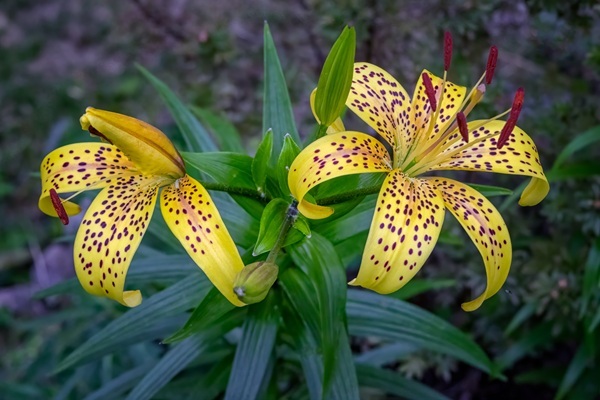
Planting and Care for Your Tiger Lilies
Tiger lilies prefer a woodland setting with acidic soil and afternoon shade during their summer blooming season
Planting Time: Plant as soon as you receive the bulbs. If delayed, store them in the refrigerator.
Planting Location: Choose a spot with about 8 hours of summer sun and well-drained soil. Don't plant during a hard freeze.
Planting Depth: Plant bulbs 2-3 times their height deep (e.g., a 2-inch bulb should be planted 4-5 inches deep).
Watering: Provide ample water as their foliage begins to appear in March and April.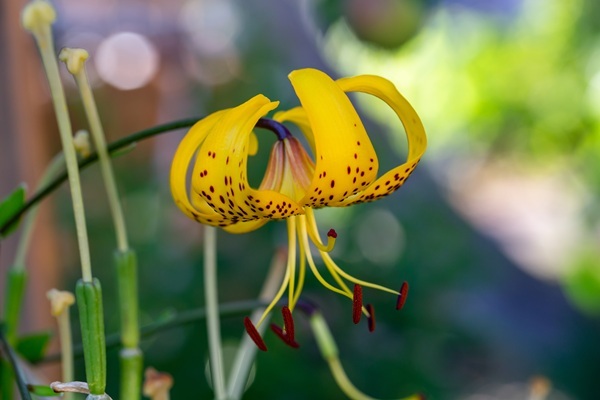
Once the blooms are coming to an end, knock off the bulbils and gently scratch them into the soil. With rich organic soil and some moisture, you'll have a stand of Tiger Lilies in just a few years
Tiger lilies are a magnet for pollinators like hummingbirds, bees, and butterflies, adding life and movement to your garden. Combine them with companion plants for year-round interest:
Companion Plants: Salvias, Lantanas, Plumbago, Phlox, Alyssum, Snapdragons, Pansies, Cyclamen, Paperwhites, Narcissus, Iris, Snowflakes, Rain Lilies, Crinums, and Hymenocallis.
Tiger lilies thrive in USDA hardiness zones 3-9, making them suitable for a wide range of climates.
The tiger lily (Lilium lancifolium), a beloved heirloom flower with origins in Asia, has found a home in gardens across the southern U.S. The Yellow Tiger lily is yellow (obviously) with spotted blooms which adds a touch of exotic beauty to any landscape.
Planting and Care for Your Tiger Lilies
Tiger lilies prefer a woodland setting with acidic soil and afternoon shade during their summer blooming season
Planting Time: Plant as soon as you receive the bulbs. If delayed, store them in the refrigerator.
Planting Location: Choose a spot with about 8 hours of summer sun and well-drained soil. Don't plant during a hard freeze.
Planting Depth: Plant bulbs 2-3 times their height deep (e.g., a 2-inch bulb should be planted 4-5 inches deep).
Watering: Provide ample water as their foliage begins to appear in March and April.
Once the blooms are coming to an end, knock off the bulbils and gently scratch them into the soil. With rich organic soil and some moisture, you'll have a stand of Tiger Lilies in just a few years
Tiger lilies are a magnet for pollinators like hummingbirds, bees, and butterflies, adding life and movement to your garden. Combine them with companion plants for year-round interest:
Companion Plants: Salvias, Lantanas, Plumbago, Phlox, Alyssum, Snapdragons, Pansies, Cyclamen, Paperwhites, Narcissus, Iris, Snowflakes, Rain Lilies, Crinums, and Hymenocallis.
Tiger lilies thrive in USDA hardiness zones 3-9, making them suitable for a wide range of climates.


